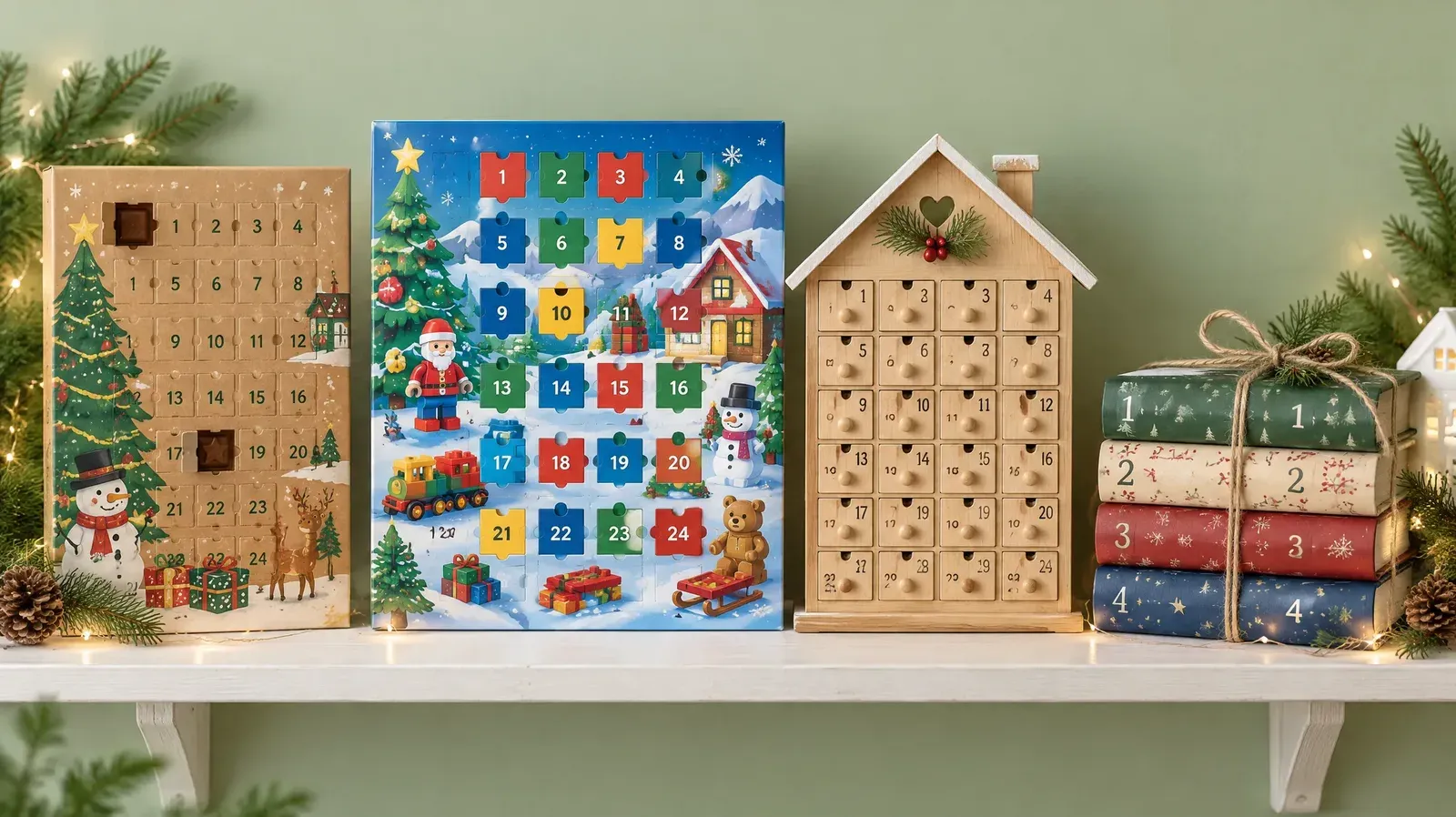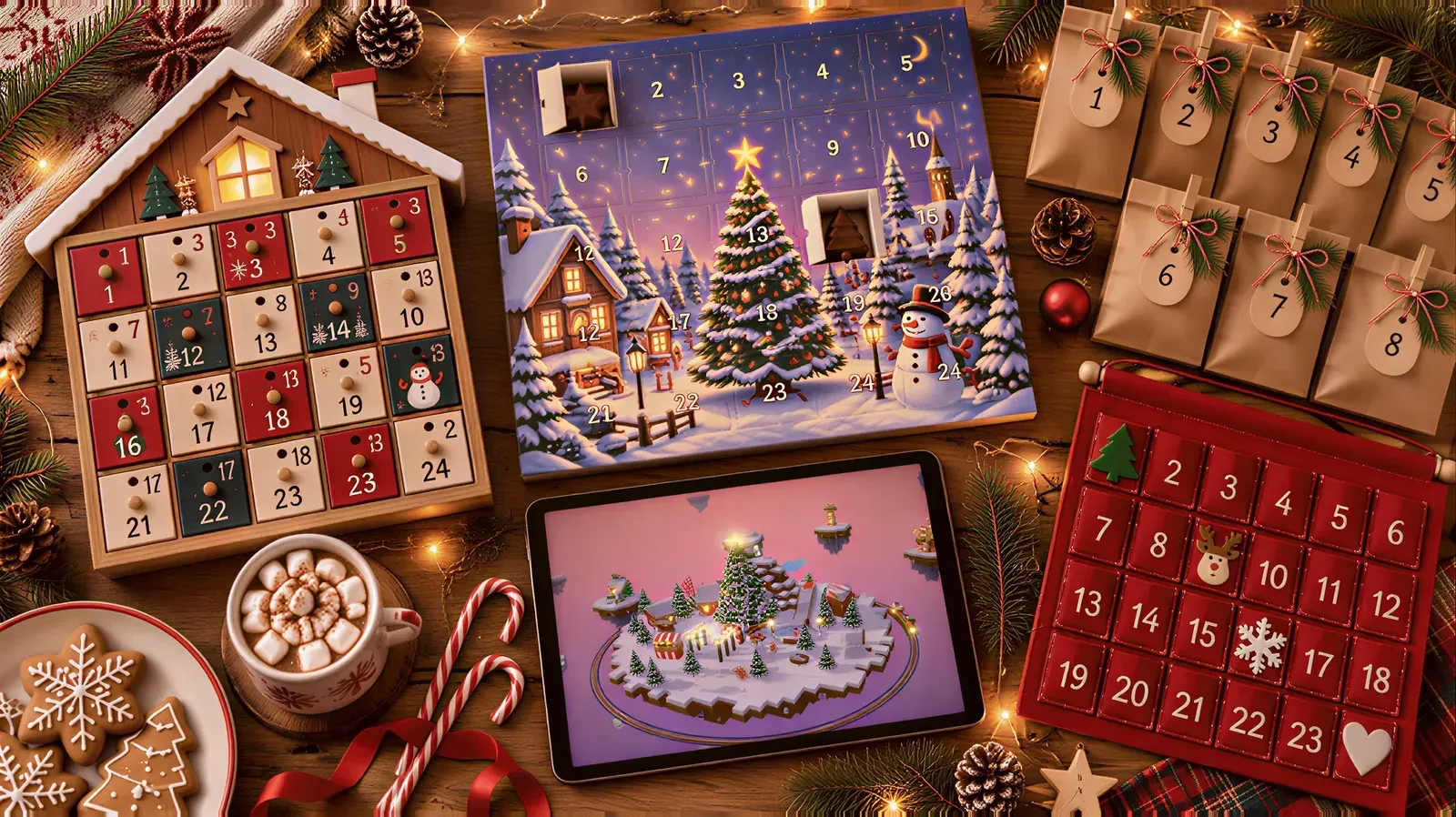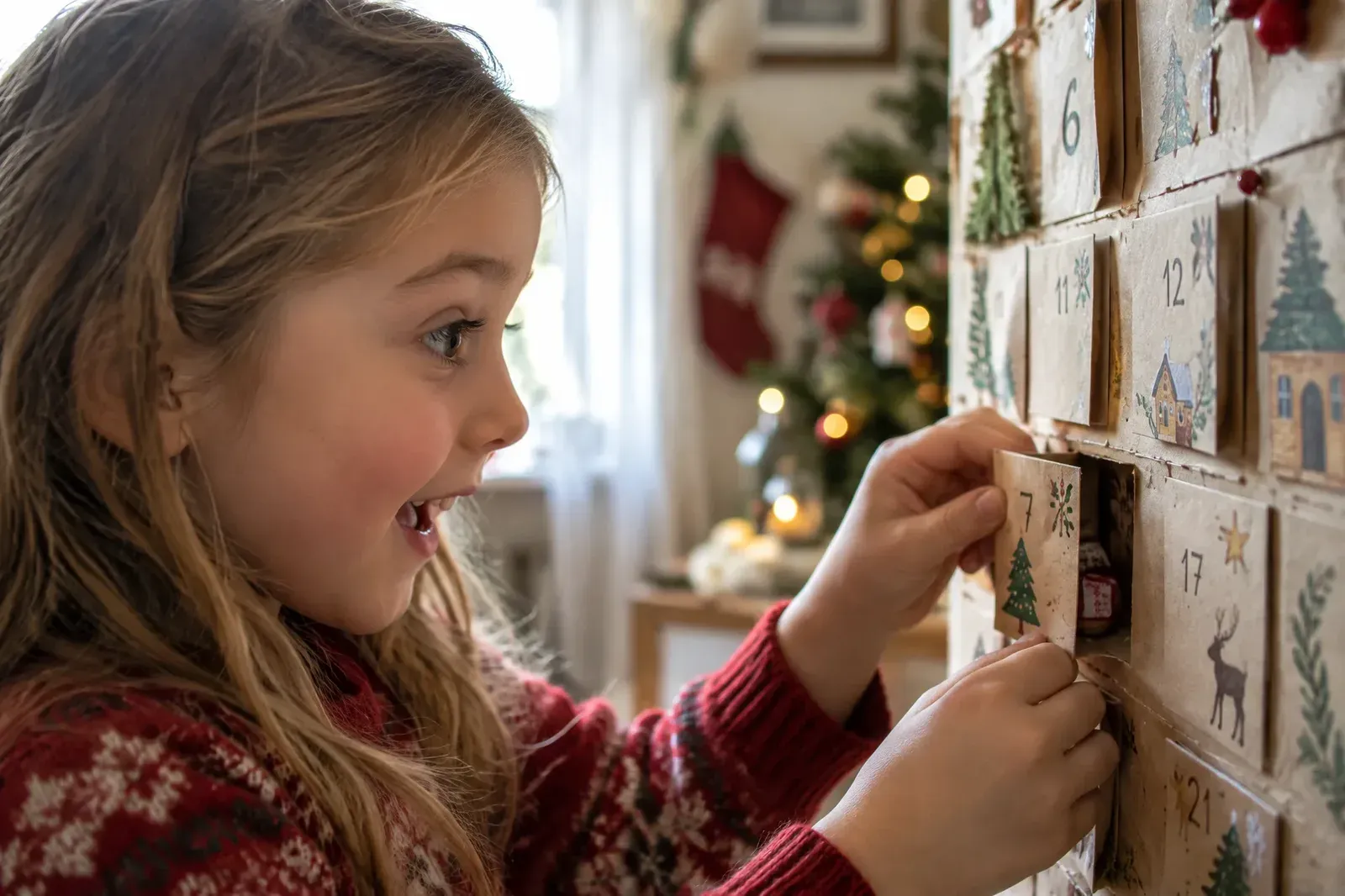
Ask an adult what they remember about Christmas as a kid, and a surprising number will mention their advent calendar. Not what was inside it. The feeling of opening it.
Why does something so small mean so much?
1. It makes waiting visible
For a five-year-old, “Christmas is in three weeks” means almost nothing. Time is slippery when you’re small. An advent calendar turns that abstract wait into something concrete: a row of doors that gets shorter every day.
Kids can see the countdown. They can count the doors that are left, point to the big one at the end, and feel the day getting closer. That makes the wait easier, and somehow more exciting.
2. Looking forward is half the fun
There’s a reason the night before a birthday feels electric. Looking forward to something good is a pleasure in its own right, and studies on anticipation suggest it can be as enjoyable as the event itself.
An advent calendar gives kids a little dose of that every single day. Tonight they wonder what’s behind tomorrow’s door. In the morning they find out. Then it starts again.
3. It’s a ritual, and kids love rituals
Same time, same place, same little moment every day. Predictable routines help kids feel safe and in control, especially in December, when everything else (school plays, parties, visiting relatives, late nights) is anything but predictable.
The advent calendar is a small, steady thing in a busy month.
4. It’s theirs
Many kids don’t get to be in charge of much. But the advent calendar? That’s their job. They open the door. They know which number is next. They remind you if you forget. That feeling of ownership is a big part of the appeal.
5. Small surprises add up
A single huge present is exciting for an afternoon. Twenty-four small surprises make the whole month feel special. And when the surprises build on each other (pieces of a scene, chapters of a story, or new things appearing in a world) every day matters, right up to the last door.
A very short history of the advent calendar
Advent calendars started in Germany in the 1800s. Families counted down the days to Christmas by marking chalk lines on a door, lighting a candle each day, or hanging up a small picture every morning.
The first printed calendars appeared in the early 1900s. A German printer named Gerhard Lang is often credited with one of the first, inspired by a homemade calendar his mother made for him as a child. Little doors came along a bit later, and chocolate behind the doors became popular after the Second World War.
Today you can find advent calendars for everything from toys and books to tea and dog treats. But the idea is the same as it was 150 years ago: one small thing a day, until Christmas.
How to make your advent calendar feel magical
You don’t need an expensive calendar. You need a few small habits.
Give it a moment
Pick a time that works every day (after breakfast, after school or before bed) and make it a moment, not a rush. Sit down together. Let them open it slowly.
Build the suspense
Ask them to guess what’s behind the door first. Count how many are left. Point at the big door at the end. Let the waiting be part of the game.
Let them tell you about it
Ask “What was your favorite door so far?” every few days. Retelling the story of the calendar helps kids remember it, and it’s lovely to hear what they noticed.
Make the last door special
Whatever your calendar is, make the final door feel like a finale. A bigger treat, a special activity, or a moment where you look back at all the doors together.
Don’t stress about missed days
If you forget a day, open two tomorrow and make it a “double door day”. Kids won’t mind. They’ll probably love it.
Where Cubemas fits in
We made Cubemas because we love that feeling of opening a door, and we wanted a calendar that builds toward something. Every day a present lands on your child’s snowy island and builds itself, block by block. By Christmas Day the island has grown into a whole little world they made one door at a time.
Whatever calendar you choose this year, we hope it gives your kids something to wake up for.