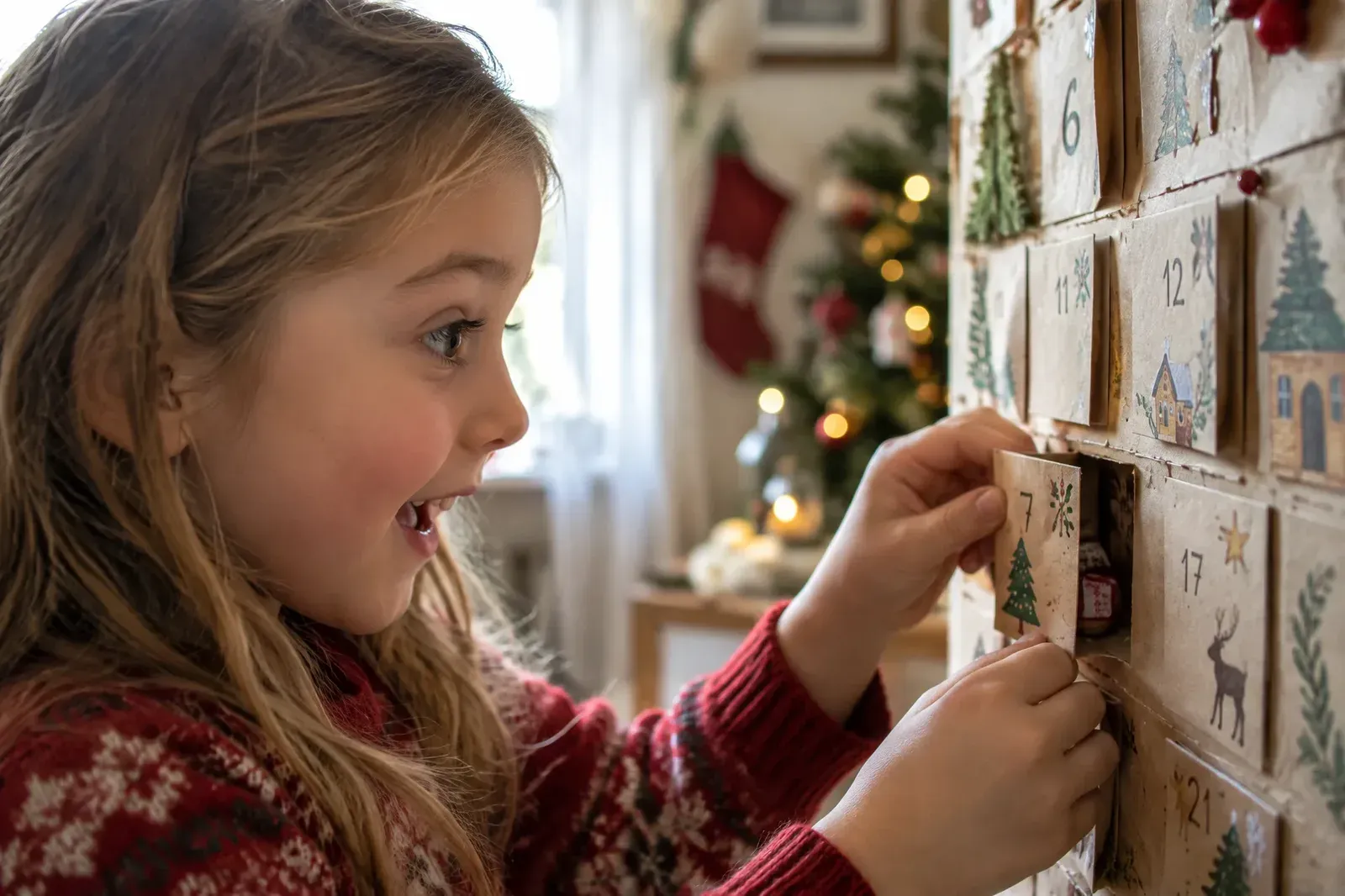
An advent calendar turns “how many sleeps until Christmas?” into something kids can see, touch and count. One small door a day, and suddenly December has a shape.
But the options have exploded. Chocolate, toys, books, beauty-style “unboxings” for kids, homemade bags on a string, printable activity cards, and online calendars that live on a tablet. This guide walks through all of them so you can pick the one that fits your family, your budget and your sanity.
When does advent start in 2026?
There are two answers, and both are right:
- Most kids’ advent calendars start on December 1 and run to December 24 (sometimes 25). That’s what nearly every shop-bought calendar does.
- The church season of Advent starts on the fourth Sunday before Christmas. In 2026 that’s Sunday, November 29, so some families light the first Advent candle a couple of days before door number 1.
If you’re buying or making a calendar, plan for December 1. If you’ve missed it, don’t worry: we’ll get to late starts below.
The main types of advent calendars for kids
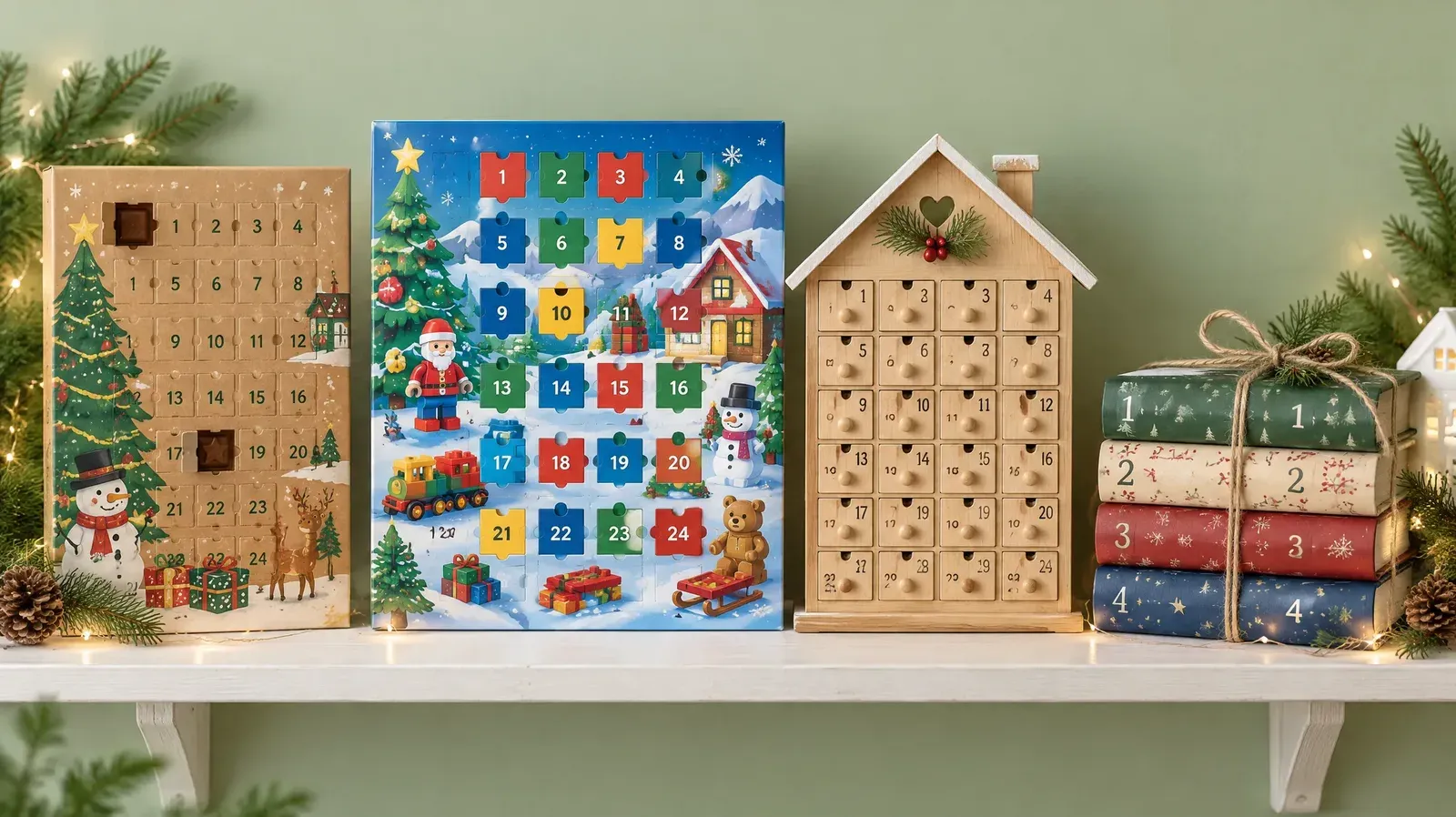
Chocolate calendars
The classic. A small chocolate behind each door, usually for a few dollars.
- Great for: tradition, tiny budgets, kids who just love the ritual of opening a door.
- Watch out for: 24 days of breakfast chocolate. Many parents move the “door opening” to after dinner instead.
Toy calendars
Big toy brands release a themed calendar every year, with a small figure or building piece behind each door. By Christmas Eve, the pieces add up to a little scene.
- Great for: kids who love building and collecting, and families who don’t mind the price.
- Watch out for: small parts for younger siblings, and a lot of plastic and packaging. They’re usually among the most expensive options.
Book calendars
24 small wrapped books (or one storybook with a chapter a day). Lovely for winding down at bedtime.
- Great for: bedtime routines and kids who are learning to read.
- Watch out for: you’ll need space to store 24 books afterwards, and little ones may want to read ahead.
DIY and reusable calendars
Numbered paper bags on a string, a wooden house with tiny drawers, a felt pocket calendar on the wall. You fill them yourself, so you decide what goes inside.
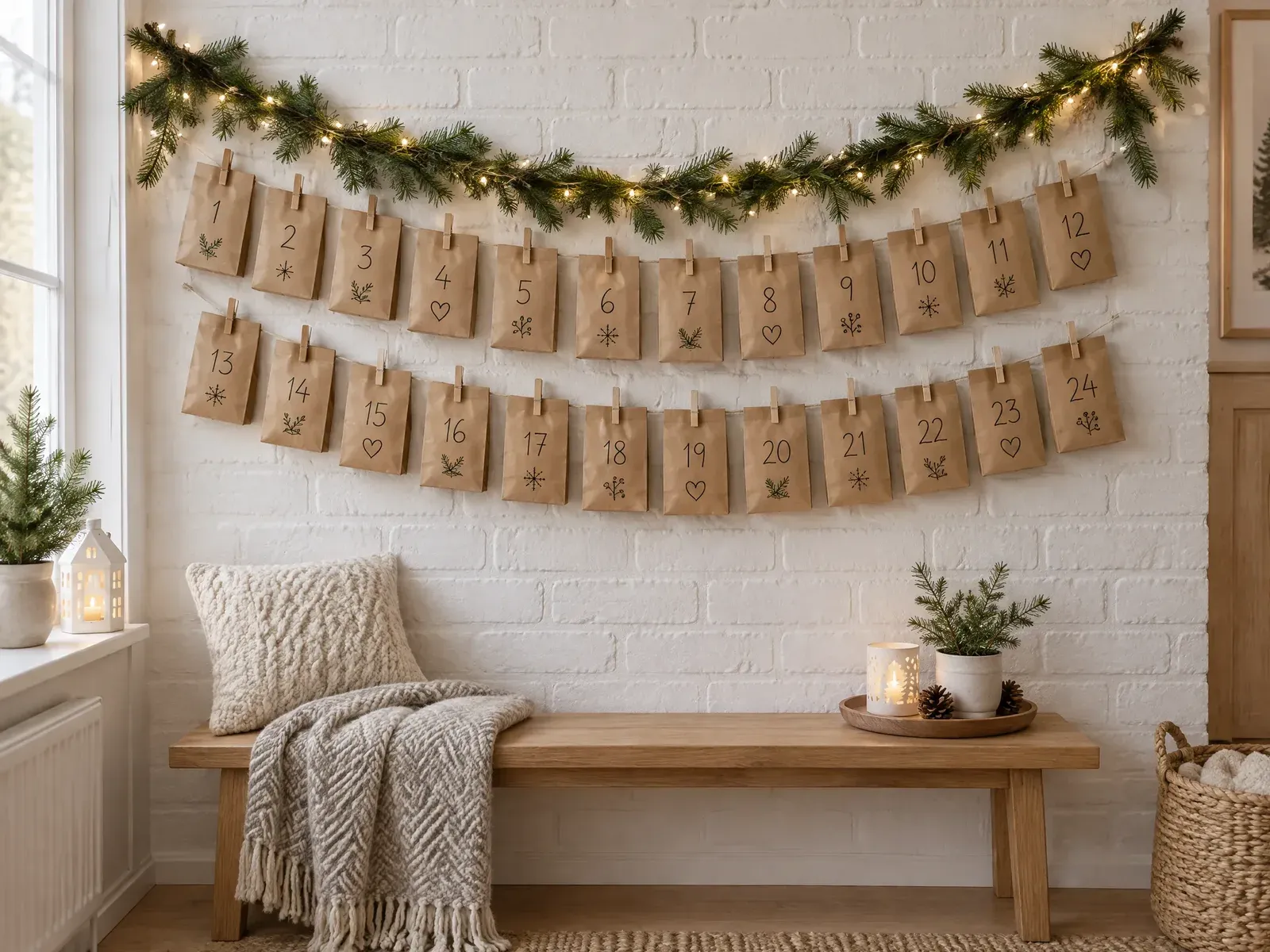 A homemade advent calendar takes an evening to make and can be refilled every year.
- Great for: families who like a project, or want treats, notes and activities instead of stuff.
- Watch out for: you have to fill 24 pockets. That’s a lot of small decisions at the busiest time of year. (Our list of 25 Christmas countdown activities can help.)
Activity calendars
Instead of a gift, each day has something to do: bake cookies, make a paper snowflake, watch a Christmas movie in a blanket fort. You can buy printable versions or write your own.
- Great for: creating memories, keeping it cheap, getting everyone off the sofa.
- Watch out for: some days are too busy for a big activity. Mix in small ones.
Digital and online calendars
An advent calendar that lives on a tablet, phone or computer. The best ones are more than a door with a picture behind it: something new appears every day and builds into a bigger story or world.
- Great for: no sugar and no clutter, travelling over the holidays, kids who are excited by games, and families with kids in different places.
- Watch out for: ads, in-app purchases and screens that are hard to put down. Not all digital calendars are made with kids in mind. We wrote a full guide on what to look for in a digital advent calendar.
Want to see all the types side by side, with typical prices? Read our advent calendar comparison for 2026.
Choosing by age
Ages 3 to 4. Keep it simple and safe. Big doors that are easy to open, no small parts, and something immediate behind each door: a sticker, a chocolate, a picture to talk about. Counting the doors together is half the fun.
Ages 5 to 7. The sweet spot. Kids this age understand that the calendar is counting down to Christmas, and they love a surprise that builds on yesterday’s. Toy, book and digital calendars that grow day by day work really well. They’re also starting to read, so anything with a little text (read aloud if needed) feels grown-up.
Ages 8 to 10. Older kids want something with substance: a bigger build, a mystery that unfolds, an activity they can do on their own, or a calendar they help make for a younger sibling. Giving them a little ownership goes a long way.
How to make the countdown magical (whatever calendar you choose)
- Pick a time and stick to it. After breakfast, after school or before bed. The ritual matters more than what’s behind the door.
- Let them guess first. “What do you think is behind number 7?” Anticipation is a big part of the joy.
- Don’t let them open ahead. Saving tomorrow’s door for tomorrow is a small, gentle lesson in waiting.
- Talk about it. Ask what their favorite day was so far. Kids love re-telling the story of the calendar.
- Keep it small. The surprise doesn’t need to be big. Thirty seconds of delight every morning beats one huge gift.
What about siblings?
If you have more than one child, decide early whether they get one calendar each or share one. Sharing can work beautifully (one opens on even days, one on odd days) but can also lead to tears about who got the “better” door. We’ve collected ideas that keep the peace in advent calendars for siblings.
Starting late, or missing a day
Life happens. If you start on December 5, you can open the first few doors together for a little catch-up party, or simply start counting from where you are. Many digital calendars (including ours) let missed presents wait, and some let you start on any day and still get one new door a day.
A quick checklist before you buy
- Is it right for your child’s age (and safe for younger siblings)?
- What happens to the stuff afterwards: eaten, read, played with, or thrown away?
- Will it still be exciting on day 19?
- Does it fit your morning (or evening) routine?
- If it’s digital: no ads, no chat with strangers, nothing to buy inside it?
Whatever you choose, the best advent calendar is the one your kids remember. And that usually has less to do with what’s behind the doors than with the minutes you spend opening them together.