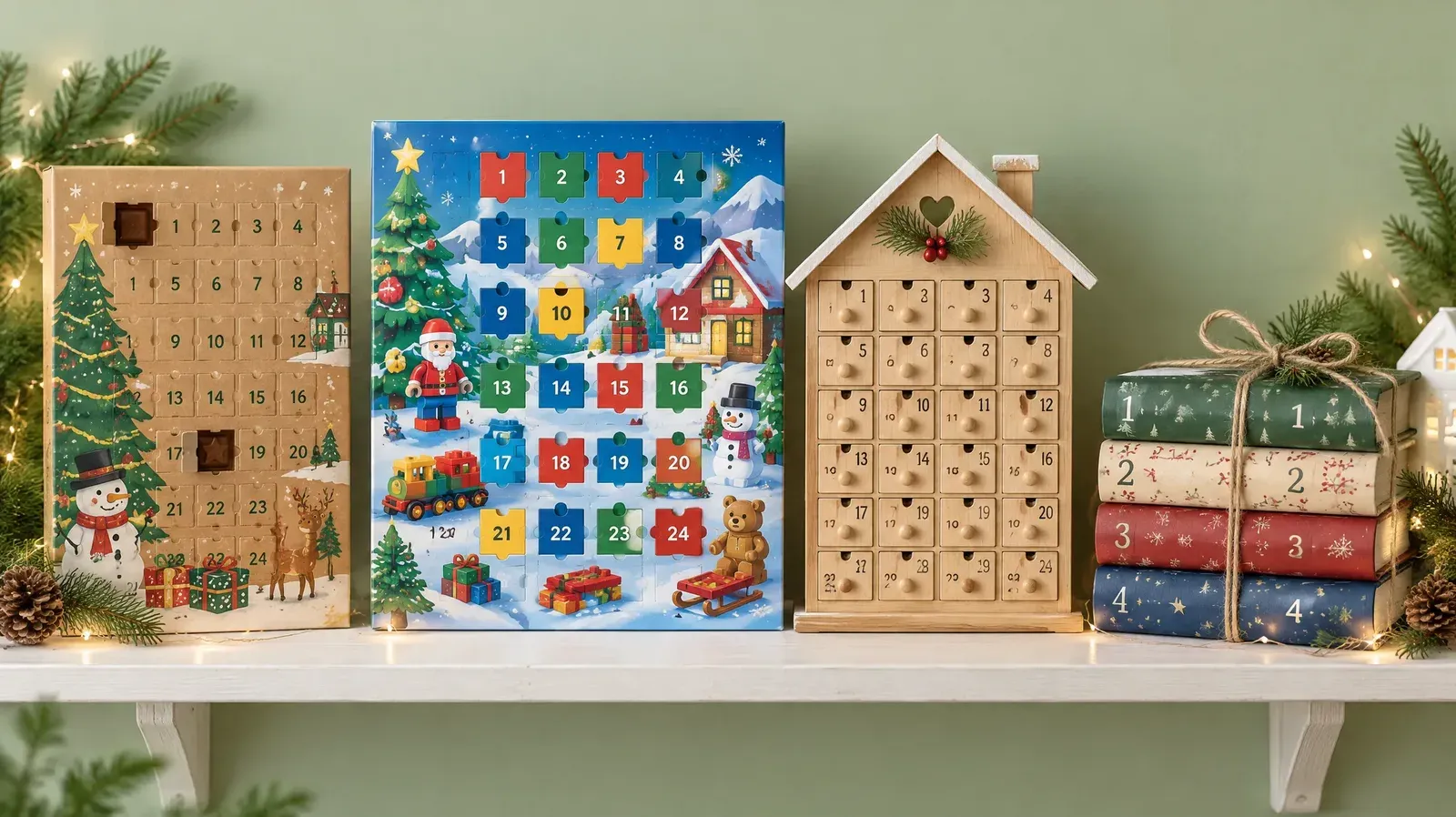
If you have more than one child, you already know the advent calendar question isn’t “which one?” It’s “how do we do this without a fight every single morning?”
Here are the setups that work for real families, plus a few tricks to keep the peace.
Option 1: One calendar each
The simplest way to avoid arguments: everyone gets their own.
Why it works: no turns, no comparing, no “but I wanted that one”. Each child gets their own little moment every day.
What to watch: cost and clutter double (or triple). And if the calendars are different, expect some comparing. “Why did she get a unicorn?”
Make it work: buy the same type for everyone, or let each child pick their own theme so the differences feel like a choice, not a slight.
Option 2: One shared calendar, taking turns
One calendar, two kids. The oldest opens odd days and the youngest opens even days (or the other way round).
Why it works: cheaper, less stuff, and it teaches a little patience.
What to watch: whoever gets door 24 wins. Decide in advance who opens the last door, or open it together.
Make it work: put two small identical treats behind each door, so the turn is just about who opens it, not who gets it.
Option 3: A family activity calendar
Instead of treats, each door holds something to do together: bake cookies, make paper snowflakes, go on a lights walk. Nobody “wins” a door because everybody does the activity.
Why it works: it brings the whole family together and works across age gaps.
What to watch: some activities are too babyish for a 10-year-old or too hard for a 4-year-old. Give older kids a job, like reading the card out loud or being in charge of the recipe.
Need ideas? Here are 25 Christmas countdown activities, one for every day.
Option 4: Separate digital calendars
For families with tablets, a digital advent calendar lets each child have their own without buying two of everything physical.
Why it works: no clutter, nothing to share, and each child’s progress is their own. Older kids can explore at their own pace while younger ones just enjoy the daily surprise.
What to watch: make sure each child really gets their own (not one shared save that the oldest races through), and that it’s free of ads and in-app purchases.
 In Cubemas, each child gets their own island and buddy on one grown-up account.
Handling big age gaps
A 4-year-old and a 9-year-old want very different things from an advent calendar. A few ideas:
- Make the older one the “advent helper”. They read the daily card, help the little one open stiff doors, or hide the treat.
- Same calendar, different surprises. Use a DIY calendar with two pockets per day, one for each child.
- Let the older one make one. Kids around 8 to 10 often love making an advent calendar for a younger sibling. It gives them a role, and the little one adores it.
Keeping the peace: small rules that help
- Agree on the rules on November 30. Who opens when, what happens if someone forgets, and who gets door 24.
- Same time, every day. Fights happen when one kid opens theirs while the other is still at school.
- No opening ahead. For anyone. Including the grown-ups.
- Celebrate together. Even with separate calendars, look at each other’s surprise. “Show me yours!” turns competition into sharing.
What we did with Cubemas
We built Cubemas with brothers and sisters in mind. Each child gets their own snowy island, their own buddy and their own calendar, all managed from one grown-up account. The first calendar is $9.99 and each extra child is $4.99.
Setting up a child’s own tablet is meant to be quick: type a short code once, bookmark the page, and they can go straight to their island every morning, no passwords needed. Their progress is saved to your account, so it doesn’t matter if they play on a tablet one day and a laptop the next.
However you do it, the goal is the same: every child gets that little burst of excitement each morning, and nobody ends December arguing about door 17.